
In my art practice, I often return to the quiet, unseen systems that hold the living world together. The atmospheric, chemical, and multispecies exchanges that shape the health of ecosystems long before we notice their decline. Connection (2026) emerges from this ongoing inquiry into environmental systems, atmospheric ecologies, and the fragile interdependence between human and nonhuman worlds.
The work centres on phytoncides, the volatile organic compounds released by trees as part of their communication and defence systems. These compounds support forest resilience by regulating microbial communities, suppressing harmful pathogens, and strengthening fungal and mycorrhizal networks. When humans enter these atmospheres, we inhale the same chemical signals. A reminder that our bodies are not separate from ecological processes but deeply entangled within them.
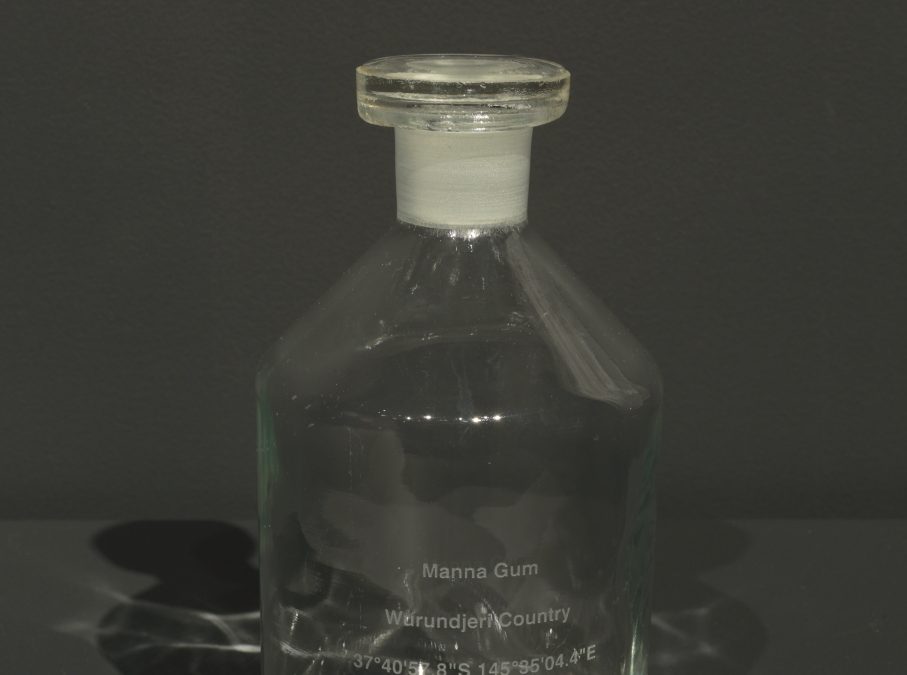
This intersection of art and science, environmental data, and multispecies research is foundational to my practice. I am drawn to the ways scientific knowledge can be translated into sensory, affective experiences that invite viewers to slow down and consider the more?than?human worlds that sustain us. In Connection, I use large?scale drawing and laboratory?referencing materials to evoke the tension between empirical observation and embodied ecological experience. The drawing’s scale mirrors the immersive quality of forest atmospheres, while the reagent bottle acts as a quiet reminder of the scientific frameworks through which we attempt to understand ecological complexity.
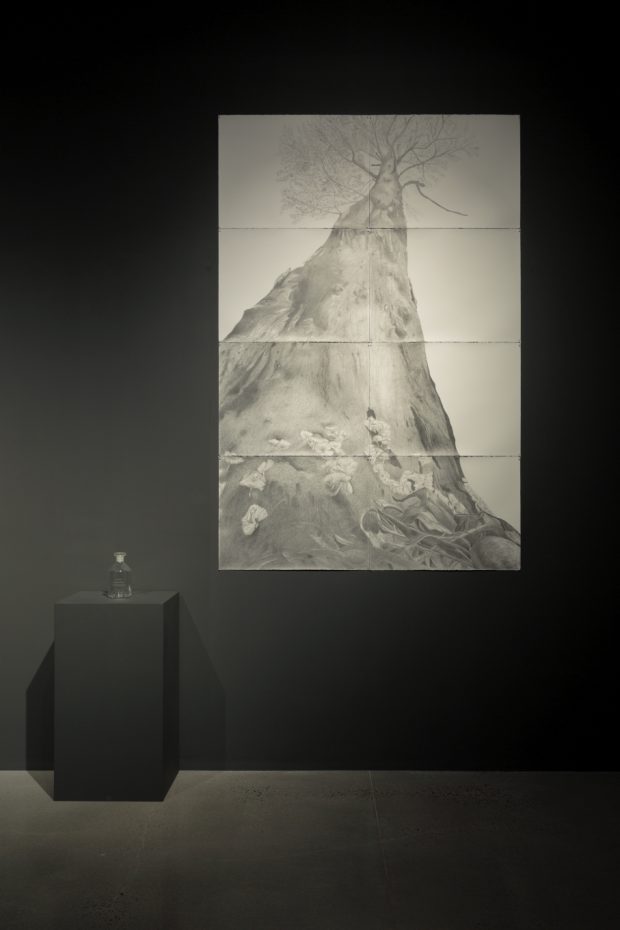
Connection is currently exhibited in Entanglements with Fungi: Life, Death and Renewal at WAMA For Art and Nature, curated by Dr Felicity Spear. The exhibition brings together artists working across fungal ecologies, environmental humanities, and interdisciplinary ecological art, situating the work within a broader conversation about the role of fungi in sustaining life, mediating decay, and enabling renewal. This context resonates strongly with my ongoing interest in multispecies entanglements, ecological storytelling, and the atmospheric conditions that shape biodiversity.
Across my practice, I explore how environmental data, species histories, and shifting ecological conditions can be transformed into artworks that hold space for reflection, grief, and reconnection. Connection continues this trajectory by foregrounding the atmospheric layer, a space where chemical signals, microbial life, and human breath intersect. It asks viewers to consider the invisible infrastructures that support ecological resilience and to recognise that our bodies are always participating in these exchanges, whether we are aware of them or not.