
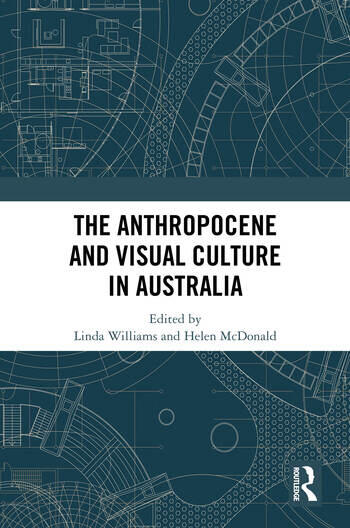
I’m honoured to share that my arts practice is featured in The Anthropocene and Visual Culture in Australia, a major new Routledge publication edited by Linda Williams and Helen McDonald and released in July 2026. The book arrives at a moment when Australia is increasingly recognised as the proverbial canary in the coal mine of global environmental change, a place where the realities of the Anthropocene are felt with particular intensity.
As the driest inhabited continent on Earth, Australia is now confronting rising planetary temperatures, catastrophic bushfires, floods, warming oceans and accelerating habitat loss. Urban expansion, extractive agriculture and mining continue to erode distinctive ecosystems, driving mammal extinctions to some of the highest rates in the world. These pressures form the backdrop for the book’s central inquiry: how Australian visual culture represents, interprets, predicts or obscures the environmental transformations reshaping our shared future. A core concern within environmental humanities, climate imaginaries and extinction studies.
The Anthropocene and Visual Culture in Australia brings together writers from visual culture, history and ecocritical theory to explore how Australian ecology is visualised across an extraordinary range of media, from ancient rock art and photography to contemporary visual art, film, television, digital mapping and AI. By foregrounding Australian perspectives, the book offers a vital environmental lens through which to understand culture in the context of climate change, extinction and colonial legacies, contributing to ongoing discussions of colonial ecologies and Anthropocene visual culture.
To have my practice included in this conversation is deeply meaningful. My work has long been shaped by ecological systems, multispecies entanglements, more?than?human perspectives and the atmospheric and biological changes unfolding across the planet. Being part of a publication that examines these themes with such rigour and breadth is both humbling and affirming.
I’m grateful to Linda Williams and Helen McDonald for recognising my work within this timely and important volume, and honoured to be featured alongside contributors who are expanding how we understand visual culture in the Anthropocene through art–science research and ecocritical inquiry.